
Adapting for Spanish readers
I’m thinking about how to adapt the content for Spanish readers. I could refer to "lectores de español" or "lectores hispanohablantes" and mention "España, fútbol, Mundial." I want to translate the text to Czech while adjusting for a Spanish audience by referencing "hispanohablantí" and "españoles."
I’m considering if I should clarify match times from AEST to CEST for better local understanding. While I shouldn’t add new facts, converting times may fall into the realm of adaptation.Adjusting for Spanish readers
I’m considering a safe approach where I keep the factual content but adjust phrasing to be more relatable for Spanish readers. I might use "lectores de habla hispana" and mention "España" or "aficionados españoles" to connect better, while still focusing on the Australia vs. Paraguay World Cup article.
It’s interesting that “Socceroos” star Jordan Bos could attract attention from European clubs. So, I’ll translate the content but maintain all the original facts, including numbers and quotes, ensuring clarity and relevance.Translating to Czech
I’m set to translate the text into Czech. The original note mentions that “round of 32” translates as "osmifinále," which is accurate for the FIFA World Cup group stage. I aim for clarity by confirming that the round is indeed called "osmifinále" in Czech.
The phrase “after his starring role secured qualification for the round of 32” will become, "… jeho hvězdný výkon zajistil postup do osmifinále mistrovství světa FIFA po vyrovnaném utkání s Paraguají, které skončilo 0:0." The country name, "Paraguay," will keep its accent. I’m ready to proceed now!Translating the second paragraph
Now, I’m focusing on the second paragraph to translate it clearly. The original statement is, "Australia’s result makes it the nation’s third time in history finishing second in the group stages after progression at the 2006 and 2022 World Cups." This translates to, "Výsledek Austrálie jí v historii třetíkrát zajistil druhé místo ve skupinové fázi po postupu na Mistrovství světa v letech 2006 a 2022."
I want to clarify that they finished second and advanced to the knockout rounds in those years. So, I’ll convey it as: "Austrálie si zajistila třetí historický případ, kdy skončila na druhém místě ve skupinové fázi a postoupila do vyřazovacích kol."Translating article sections
I need to preserve the tags and their content as is, but it looks like we can translate the figcaption text since it isn’t part of the
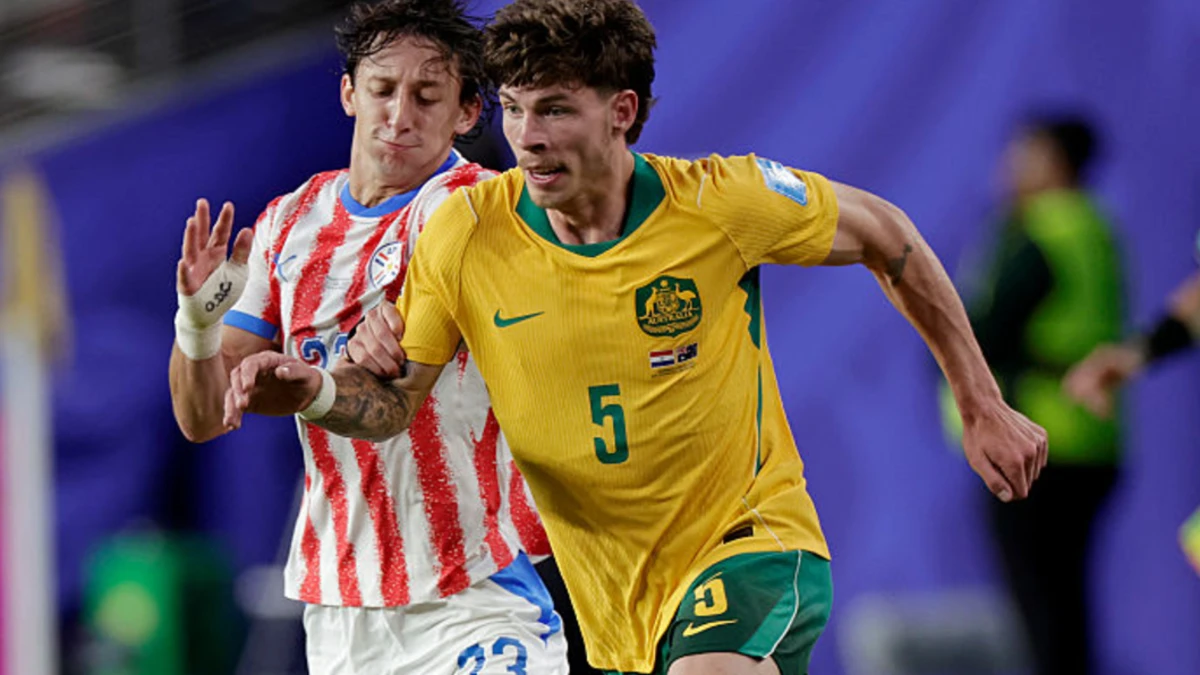
tag. The caption reads, "Nestory Irankunda is challenged by Omar Alderete," and I’ll translate that.
I’m rearranging the original paragraphs into Czech while maintaining the structure. For example, "Coming into the match second in the group…" translates to "Přicházeli do zápasu druzí ve skupině…"
I’ll pay attention to Czech grammar and phrasings as I continue translating each section. I’ll ensure everything remains consistent and clear!Translating match details
For the second figure, I’ll start with the sentence about the match being low-risk for both teams because Paraguay needed a draw. That translates to, "Obě strany byly zjevně spokojeny s bezrizikovým zápasem…"
Next, Cristian Volpato’s substitution will translate as, "Cristian Volpato, který nastoupil poprvé a vypadal nebezpečně na pravé straně, byl v 58. minutě vystříd
